
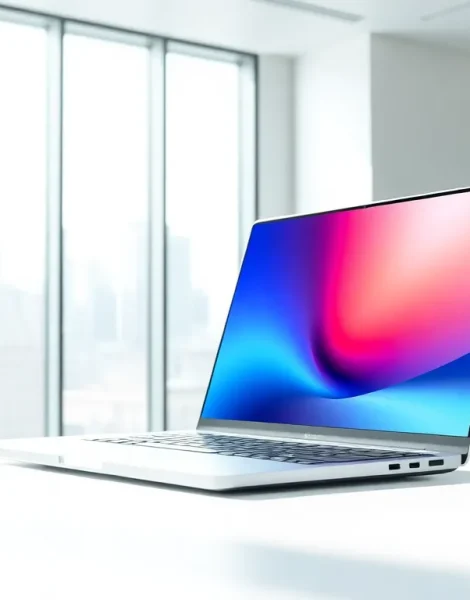
Laptop trends 2026 will reshape how people work, create, and connect. The next generation of portable computers brings significant upgrades in processing power, battery efficiency, and display quality. Manufacturers are pushing boundaries with AI integration, sustainable materials, and connectivity features that were science fiction just a few years ago. This guide breaks down the major laptop trends 2026 has in store, from smarter chips to greener builds. Whether someone shops for a new device or simply wants to stay informed, these developments deserve attention.
Table of Contents
ToggleKey Takeaways
- Laptop trends 2026 prioritize AI-powered hardware with built-in NPUs that handle machine learning tasks locally for faster performance and better privacy.
- Thinner ultrabooks will deliver 18-20 hours of battery life thanks to ARM-based processors and silicon-carbon battery technology.
- OLED and mini-LED displays with 120Hz+ refresh rates become standard, while tandem OLED technology boosts brightness and cuts power consumption by 30%.
- Sustainability takes center stage as manufacturers use over 50% recycled materials and design laptops with user-replaceable components.
- Wi-Fi 7, USB4 Version 2.0, and 5G connectivity bring faster speeds and more reliable wireless performance to mainstream laptop trends 2026.
- Built-in 1080p webcams with improved sensors eliminate the need for external cameras during video calls.
AI-Powered Performance and On-Device Intelligence
The biggest shift among laptop trends 2026 centers on artificial intelligence built directly into hardware. Neural processing units (NPUs) now sit alongside traditional CPUs and GPUs in most mid-range and premium laptops. These dedicated AI chips handle machine learning tasks locally, which means faster performance and better privacy.
Intel, AMD, and Qualcomm have all released processors with integrated NPUs capable of handling 40+ TOPS (trillion operations per second). This matters for everyday users because AI features no longer need constant cloud connections. Video calls get real-time background noise cancellation. Photo editing apps apply complex filters instantly. Writing tools suggest improvements without lag.
Microsoft’s push for “Copilot+ PCs” has accelerated this trend. Software developers now optimize their applications for on-device AI, creating smoother experiences across creative, productivity, and entertainment software. The laptop trends 2026 showcase include voice assistants that understand context better and security systems that recognize users through behavior patterns rather than just faces.
For professionals, AI-powered laptops speed up workflows dramatically. Video editors see rendering times cut in half. Data analysts run complex models without external servers. Even casual users benefit, smart battery management learns usage patterns and extends runtime accordingly.
Thinner Designs With Longer Battery Life
Laptop trends 2026 deliver something consumers have wanted for years: thinner machines that last longer on a single charge. This seems contradictory, but advances in chip efficiency and battery chemistry make it possible.
ARM-based processors from Qualcomm and Apple continue gaining ground in Windows and macOS laptops. These chips draw less power than traditional x86 designs while delivering competitive performance. The Snapdragon X Elite and Apple M4 families demonstrate that users don’t need to sacrifice speed for battery life.
Expect premium ultrabooks measuring under 12mm thick with 18-20 hours of real-world battery life. That’s enough to handle a cross-continental flight with juice to spare. Some manufacturers experiment with silicon-carbon battery cells that hold 20% more energy in the same physical space.
Cooling solutions have improved too. Vapor chamber technology, once reserved for gaming laptops, appears in thin business machines. Better thermal management means processors sustain higher speeds longer without throttling. The laptop trends 2026 prove that portability and power can coexist.
Charging speeds have jumped as well. Many 2026 laptops support 140W USB-C charging, reaching 50% capacity in under 30 minutes. Quick top-ups during coffee breaks keep devices running through packed schedules.
Advancements in Display Technology
Display innovation stands out among the key laptop trends 2026 brings to market. OLED panels have become standard in premium segments, offering perfect blacks, vibrant colors, and improved power efficiency compared to earlier generations.
Mini-LED backlighting dominates the high-performance space. These screens deliver HDR experiences with thousands of dimming zones, creating contrast ratios that rival OLED without the burn-in concerns. Content creators appreciate the accuracy these panels provide for color-critical work.
Refresh rates have climbed across categories. Business laptops now commonly feature 120Hz displays, making scrolling and cursor movement noticeably smoother. Gaming machines push 240Hz and beyond, giving competitive players every possible advantage.
The laptop trends 2026 also include wider adoption of tandem OLED technology. This approach stacks two OLED layers, boosting brightness while reducing power consumption by up to 30%. Outdoor visibility improves significantly, addressing a long-standing weakness of OLED screens.
Aspect ratios continue shifting toward 16:10 and 3:2 formats. These taller screens provide more vertical space for documents, spreadsheets, and web browsing. Users see more content without constant scrolling. Anti-reflective coatings have improved dramatically, cutting glare in bright environments without adding a matte film that dulls image quality.
Sustainability and Eco-Friendly Materials
Environmental responsibility shapes laptop trends 2026 in meaningful ways. Major manufacturers have committed to carbon-neutral production and increased use of recycled materials.
Dell, HP, Lenovo, and Apple lead efforts to incorporate ocean-bound plastics, recycled aluminum, and post-consumer recycled content into their devices. Some models now contain over 50% recycled materials without compromising build quality or durability.
Packaging has transformed as well. Foam inserts and plastic bags are disappearing, replaced by molded fiber and paper-based alternatives. Several brands ship laptops in boxes that convert into laptop stands or storage solutions, reducing waste further.
Repairability scores have become marketing points. Framework’s modular approach has influenced the entire industry. More 2026 laptops feature user-replaceable batteries, RAM, and storage. This extends device lifespans and keeps functional machines out of landfills.
Energy efficiency certifications matter more to buyers. EPEAT Gold and Energy Star ratings influence purchasing decisions, especially for corporate procurement. The laptop trends 2026 reflect a market where sustainability sells.
Enhanced Connectivity and Wireless Standards
Connectivity upgrades define several important laptop trends 2026 delivers. Wi-Fi 7 has moved from early adoption to mainstream inclusion. This standard offers speeds up to 46 Gbps theoretically, with real-world performance roughly triple that of Wi-Fi 6E. Multi-link operation allows devices to use multiple frequency bands simultaneously, reducing latency and improving reliability.
Bluetooth 6.0 appears in flagship models, bringing better range and more stable connections for peripherals. Audio quality improves with support for higher bitrate codecs, making wireless headphones sound closer to wired alternatives.
USB4 Version 2.0 ports handle 80 Gbps transfers, enough to run multiple 4K displays and high-speed storage from a single connection. Thunderbolt 5 brings similar capabilities to Intel-based systems. Docking station setups have never been simpler or more capable.
5G connectivity continues expanding in business laptops. Users work from anywhere with cellular signal, bypassing the security risks of public Wi-Fi. Some carriers offer laptop-specific data plans at reasonable prices.
The laptop trends 2026 also include improved webcam quality as standard. 1080p cameras with larger sensors and better low-light performance come built into most models. External webcams become unnecessary for typical video calls.


